Waste incinerators for medical and solid waste.
Medical waste incinerators and basic solid waste incinerators, supplied as complete units with dry, wet or basic flue-gas purification and sized to your waste stream and emission standard.
What it is
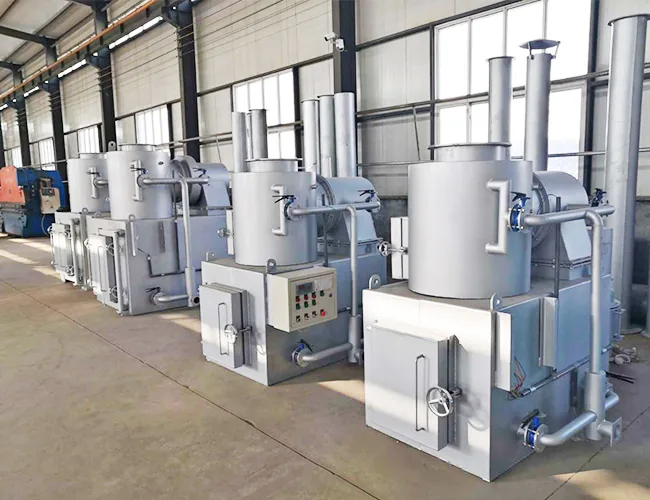
An incinerator disposes of medical and general solid waste by high-temperature combustion. Waste burns in a primary chamber; the flue gas then passes through a secondary combustion stage that gives it enough residence time to complete combustion before it is cooled and cleaned. The process reduces the volume of the waste and renders it inert. Two ranges are supplied: the LDF series for medical waste and the XJY series for general solid waste. Flue-gas treatment is offered in three configurations — dry purification, wet purification or basic — according to the waste and the emission standard that applies.
Purification configurations
Dry purification
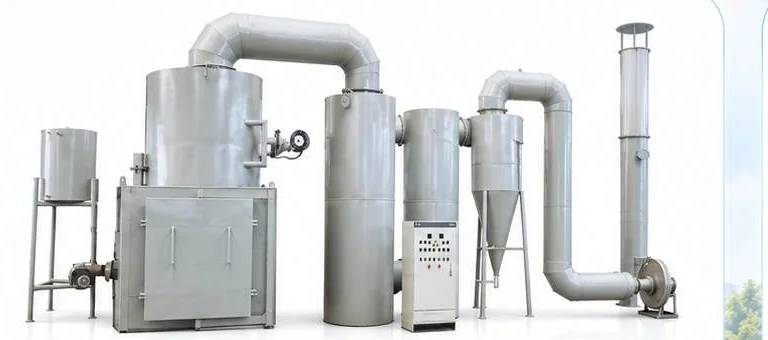
Flue gas leaves the primary gasification chamber and passes through a mixing combustion chamber and a secondary combustion chamber — more than 2 seconds of residence time, up to 1,200 °C — before entering a purification chamber whose Ca(OH)₂ filter bricks neutralise acid gases and adsorb pollutants. The standard dry-purification models run from LDF-20 (up to 20 kg per batch) to LDF-30–200 (up to 200 kg per batch, one blower).
Wet purification
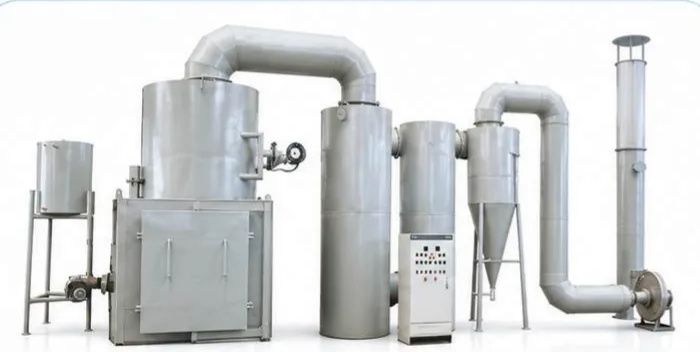
A multi-stage wet train is added after combustion — quench cooling tower, deacidification tower, activated carbon adsorber and bag dust collector — with a venturi scrubber and cyclone dust collector in the wet-type configuration. Gas leaves through the induced draft fan and the stack.
Basic
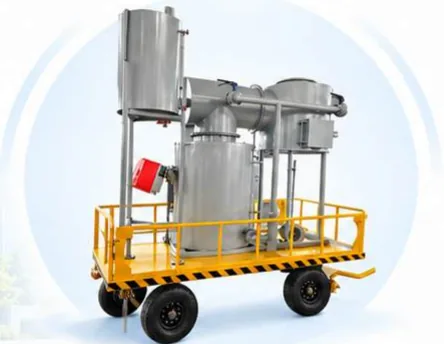
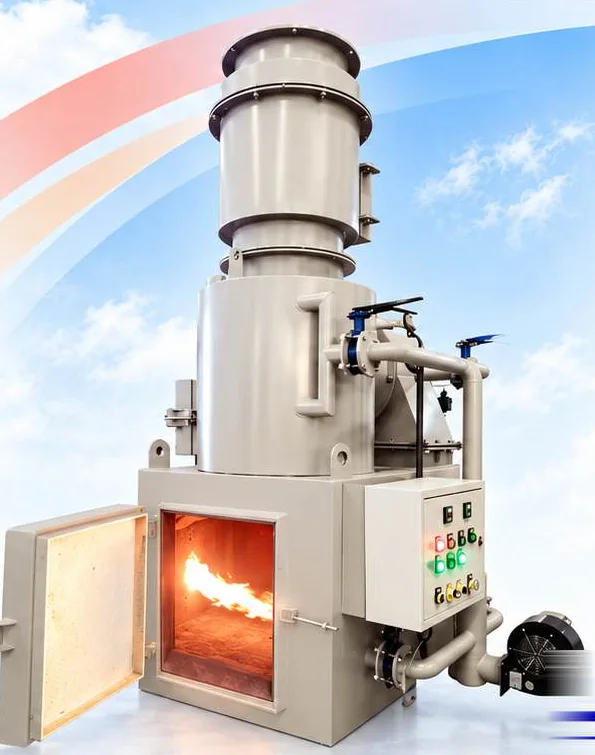
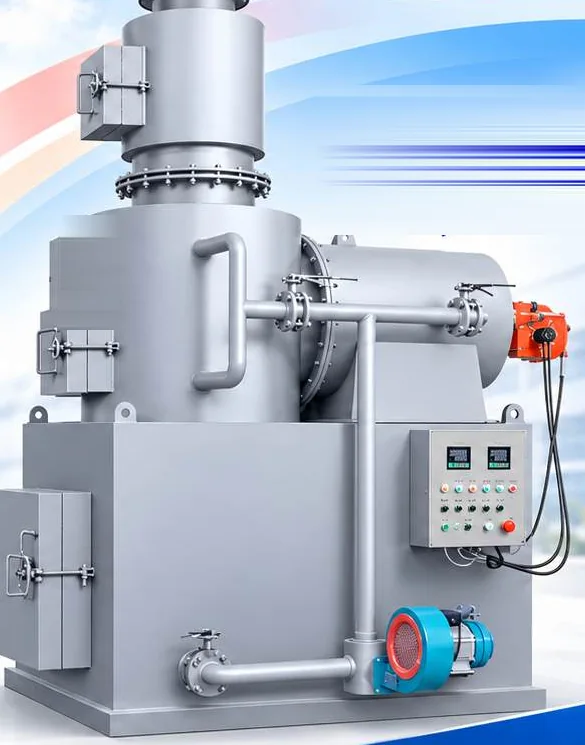
A single compact combustion train for general solid and hazardous waste — compact structure, stable combustion and straightforward operation, without the wet gas-treatment stages.
Model lineup
Two ranges cover the span from small clinics to large hospitals, farms and industrial waste streams.
Medical waste incinerators
Dual-chamber units for infectious waste from clinics, hospitals and laboratories.
Municipal and domestic solid waste incinerators
General solid waste units from 50 to 500 kg/h for towns, communities and commercial sites.
Small-scale incinerators
Compact units for on-site disposal where space or daily volume is limited.
Industrial waste incinerators
Dual-chamber units for non-recyclable factory, warehouse and commercial waste.
Animal carcass incinerators
On-site disposal of dead livestock and poultry for farms and poultry houses.
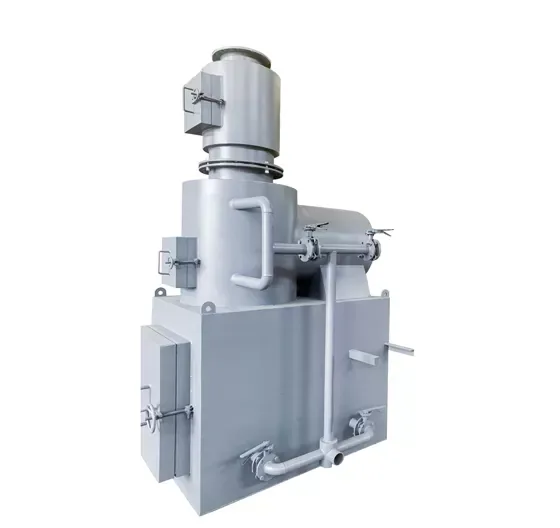
LDF series — medical waste incinerators
| Model | Incineration capacity | Size (L × W × H) | Combustion chambers | Typical use |
|---|---|---|---|---|
| LDF-20 | 10–20 kg/h | 1600 × 1200 × 1700 mm | Grate design, dual combustion chamber | Township health hospitals and small hospitals |
| LDF-50 | 30–50 kg/h | 1800 × 1300 × 3000 mm | Gasification pyrolysis with secondary high-temperature combustion | Health clinics, sanitary waste and small to medium-size hospitals |
| LDF-100 | [to be confirmed with factory] | [to be confirmed with factory] | [to be confirmed with factory] | [to be confirmed with factory] |
| LDF-200 | 150–200 kg/batch | 2300 × 1600 × 3500 mm | Four combustion chambers, twin air fans, fully enclosed negative pressure | Large hospitals and pharmaceutical factories |
| LDF-500 | [to be confirmed with factory] | [to be confirmed with factory] | [to be confirmed with factory] | [to be confirmed with factory] |
XJY series — basic incinerators
| Model | Incineration capacity | Size (L × W × H) | Waste inlet | Induced draft fan |
|---|---|---|---|---|
| XJY-20 | 20–30 kg/h | 0.9 × 0.6 × 2.0 m | 400 × 520 mm | 0.25 kW |
| XJY-50 | 50–100 kg/h | 1.8 × 1.15 × 3 m | 620 × 800 mm | 0.37 kW |
| XJY-100 | 100–150 kg/h | 2 × 1.4 × 3.5 m | 760 × 960 mm | 0.55 kW |
| XJY-200 | 200–300 kg/h | 2.2 × 1.4 × 3.8 m | 900 × 1100 mm | 0.75 kW |
| XJY-300 | 300–400 kg/h | 3 × 2 × 4.8 m | 1080 × 1280 mm | 1.1 kW |
| XJY-500 | 400–500 kg/h | 3.3 × 2.3 × 4.8 m | 1080 × 1280 mm | 1.1 kW |
Full model range: LDF-10 to LDF-500W and XJY-20 to XJY-500. Detailed specifications are provided with the commercial offer.
Typical applications
Hospitals and clinics
medical waste, sanitary waste and used PPE treated on site.
Pharmaceutical factories
process waste and expired materials that cannot leave the site untreated.
Industrial parks
general solid and hazardous waste from manufacturing tenants.
Remote sites and islands
facilities far from any central waste-collection service.
Municipal solid waste
community and town waste where a central facility is not available.
Delivery and loading
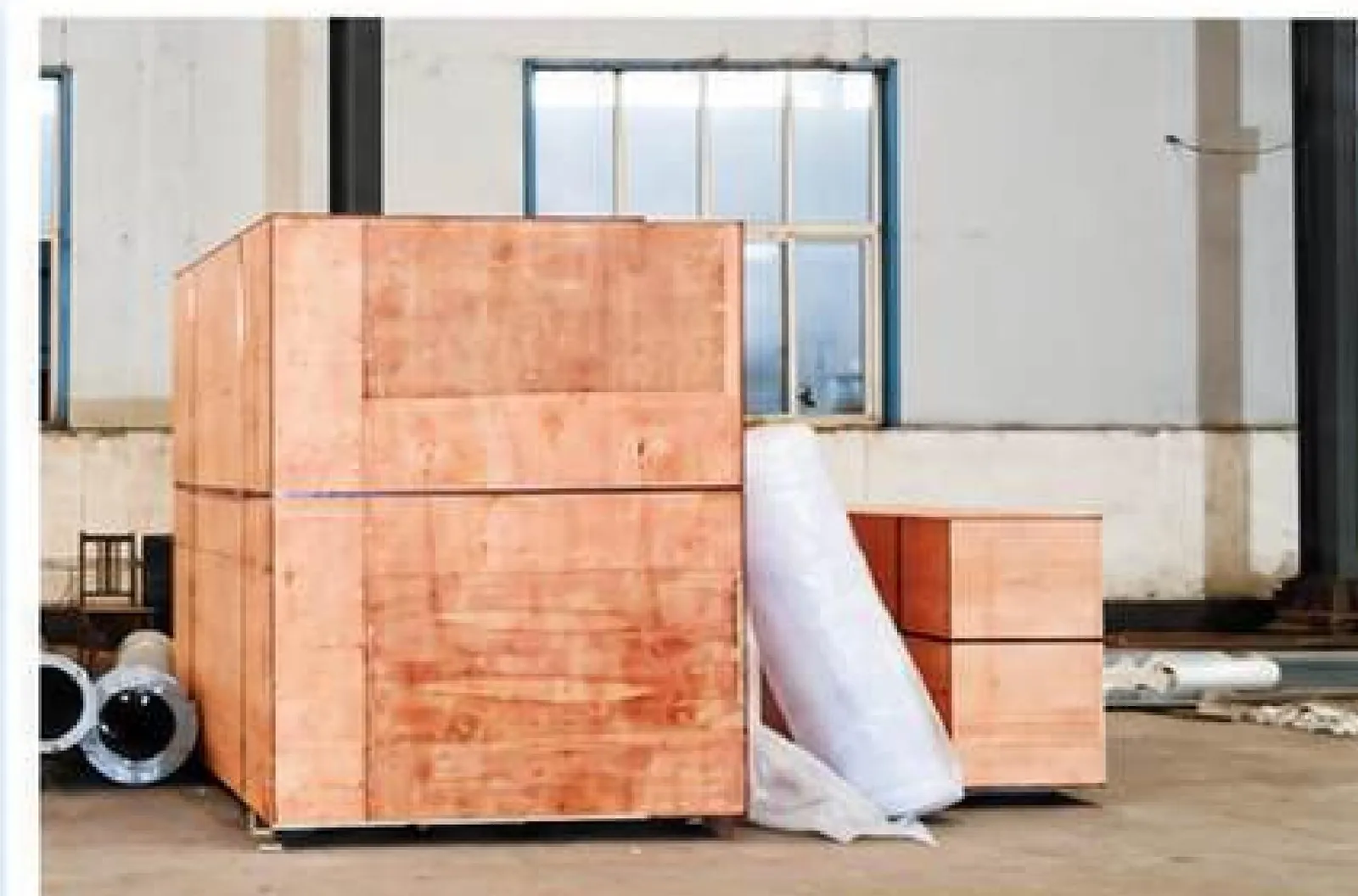
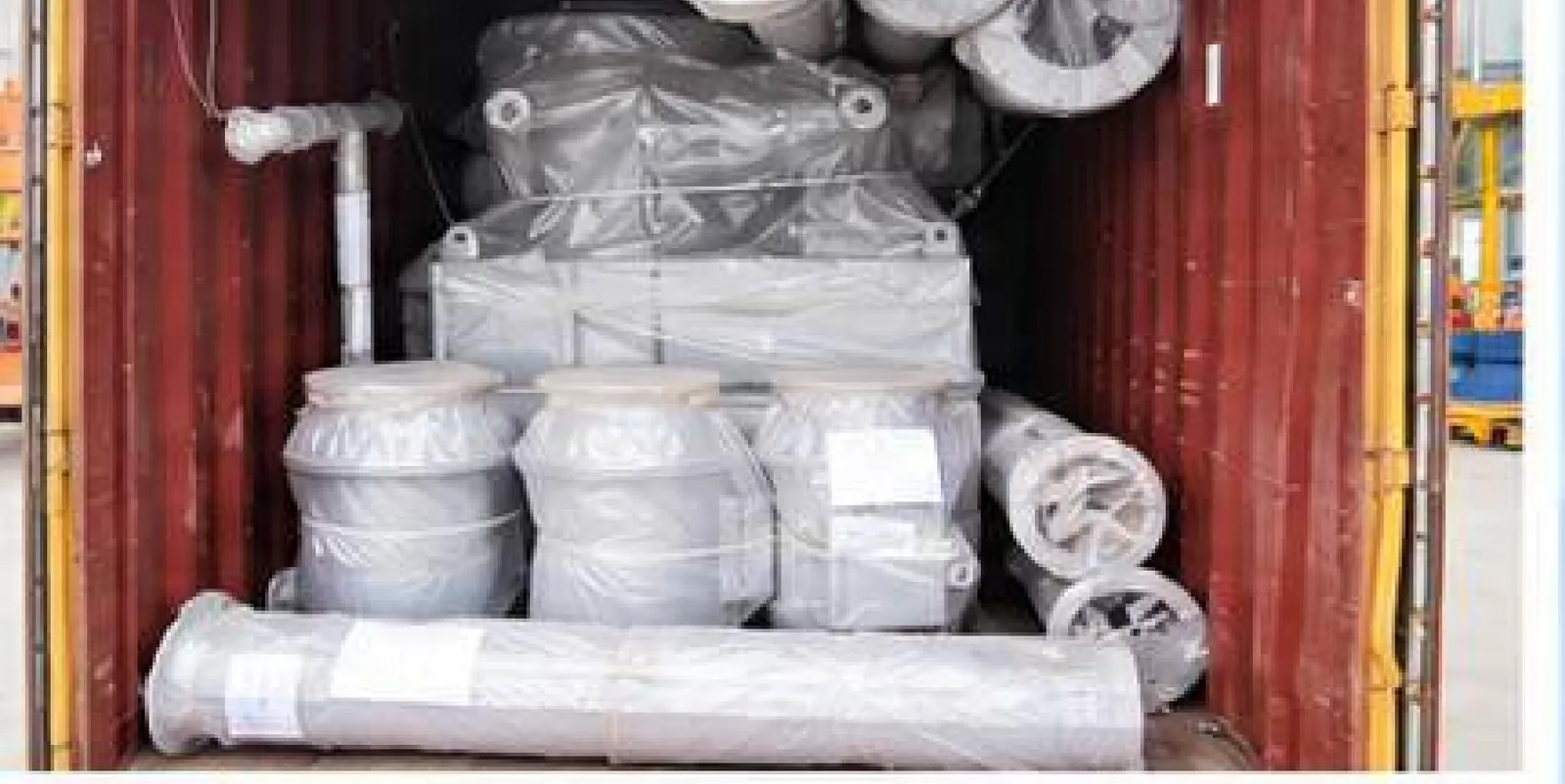
Units are built and tested before shipment, then loaded and shipped with export documentation, arriving as a complete assembly for site connection and commissioning. Loading arrangement, container count and delivery schedule: [to be confirmed with factory].