On-site wastewater treatment and medical waste disposal for hospitals and clinics.
For hospitals, clinics, health centres and laboratories that sit outside a municipal sewer and outside a reliable hazardous-waste collection route — treatment and incineration sized to the facility and commissioned on site.
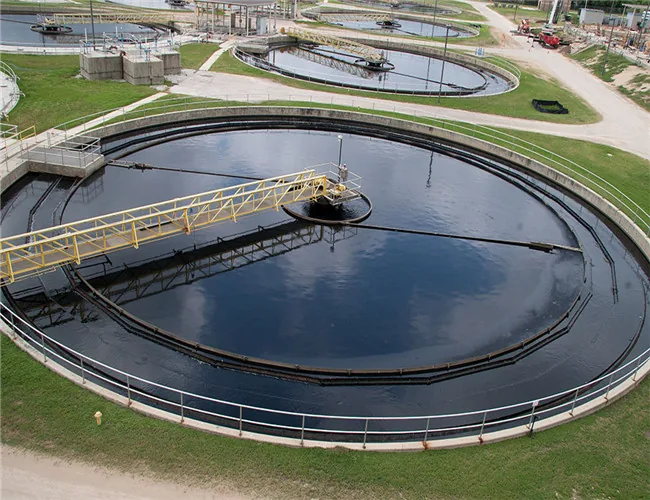
When the network does not reach the site
A hospital or a clinic outside a served area carries two duties that a city normally takes away from it. The wastewater has no sewer to go to, and the infectious waste has no collection route the facility can rely on. Both then have to be solved where they are generated.
- No sewer connection — the effluent has to be treated and discharged on site, or reused.
- No reliable collection — infectious waste leaves the site only when a licensed carrier arrives, on a schedule the facility does not control.
- Holding the waste instead is not a solution — it accumulates where it is generated and the risk it carries stays on site.
- Two suppliers, two schedules — treatment bought from one supplier and the waste unit from another leaves the site to make them work together on its own.
Two duties, one supply
Wastewater
A packaged train — screening, equalization, biological treatment, membrane separation and disinfection — sized to the load the facility produces rather than to its bed count alone.
Medical waste
Dual-chamber incineration disposes of infectious waste on the site where it is generated. The secondary chamber is held at or above 850 °C with a flue-gas residence time of at least 2.0 s.
Both from one works
The plant and the incinerator are sized against the same site survey and offered as one package, so the facility deals with one supplier instead of two.
What we supply
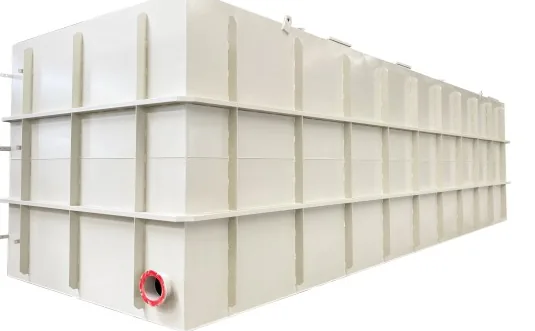
Containerized sewage treatment plant
A complete train in ISO containers — screening, equalization, biological treatment, membrane separation and disinfection. 12–360 m³/day per unit.
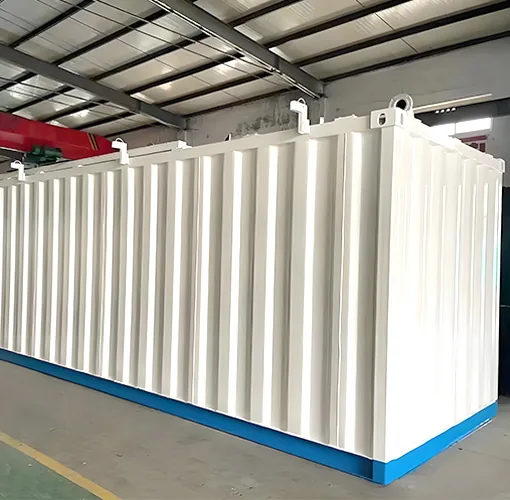
Integrated MBR equipment
Biological treatment and membrane separation in one packaged unit — 12–240 m³/day per unit, with a permeate suitable for reuse.
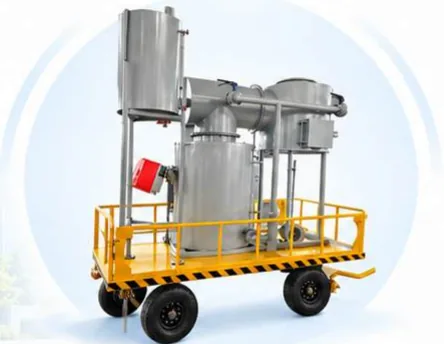
Medical waste incinerators
Dual-chamber LDF units for infectious waste, with the dry or wet flue-gas configuration the emission standard at the site requires.
Integrated site package
Treatment, sludge handling, incineration and water supply combined for a site that has to stand on its own.
Why the work goes on site, in containers
The plant is built before it travels
Equipment is assembled, piped and wired at the works and tested before shipment, so site work is limited to a level foundation, the inlet and outlet connections, power, water and commissioning.
A container needs only a small pad
A containerized plant occupies a small concrete pad, which suits a hospital site that is already built up and has no room for a civil works programme.
The waste does not leave the site
Infectious waste treated where it is produced removes the transport step and the handling risk that comes with it, and combustion reduces the waste volume by up to 90 %, leaving an inert ash for disposal.
Room to grow, or to move
Capacity is extended by adding containers, and a plant can be relocated if the service area changes.
What to send us
- Inpatient beds and outpatient activity, or a measured daily flow (m³/day)
- Daily waste quantity (kg/day) and whether the stream is clinical waste or mixed
- Discharge point and the effluent standard the permit applies
- Site power — voltage, frequency and phase, grid or generator
- Whether the treated water is discharged or reused