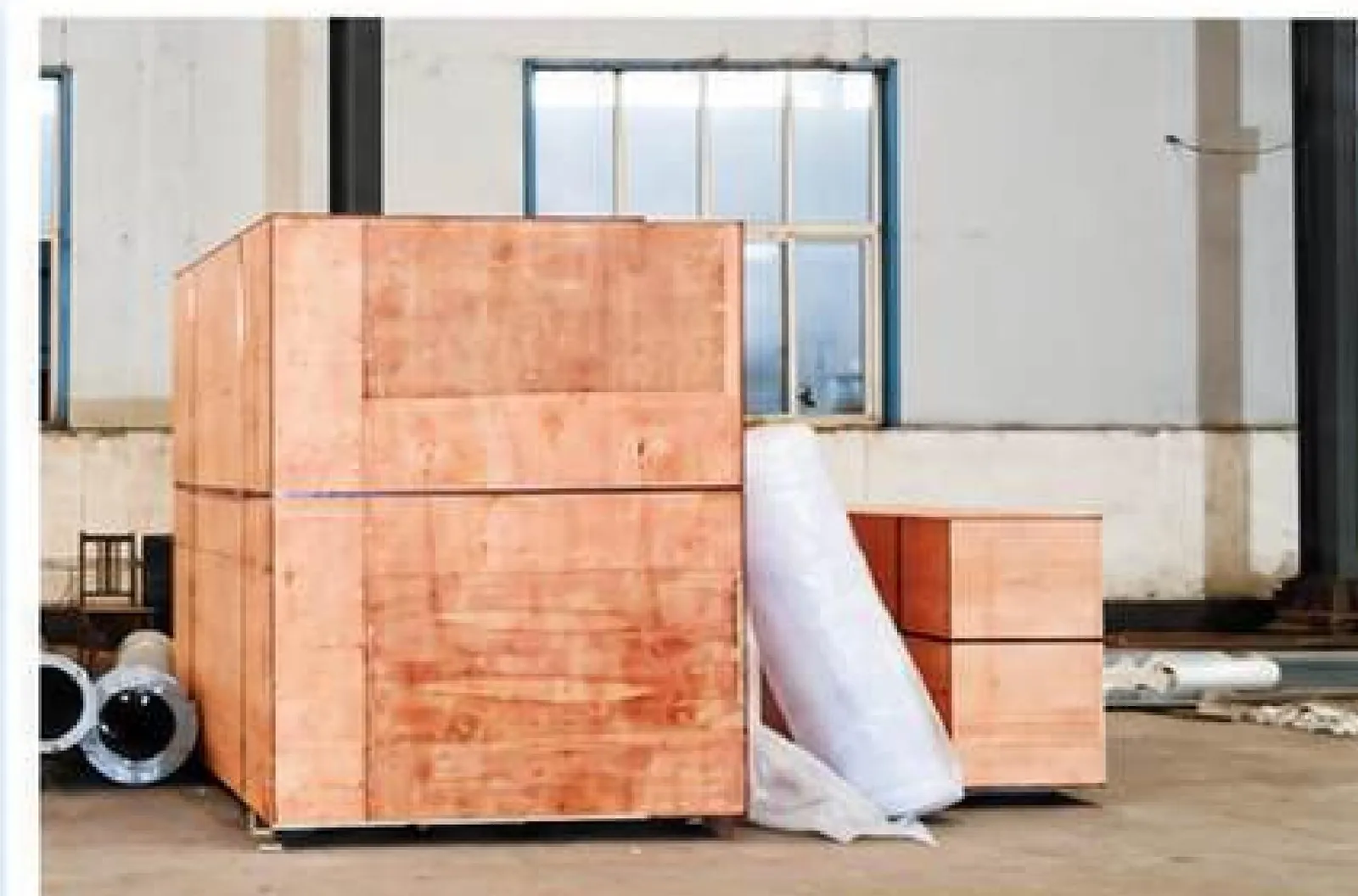
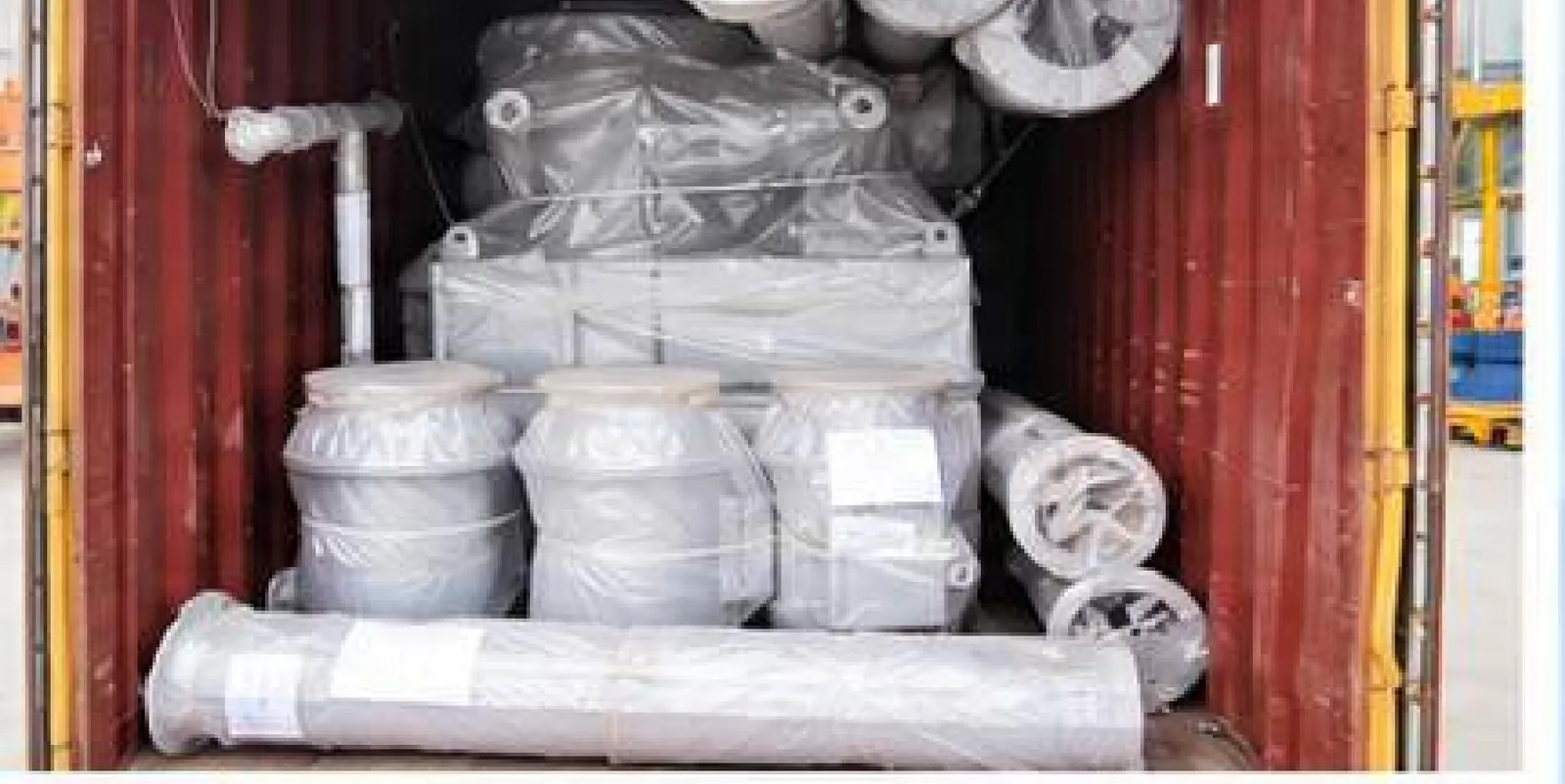
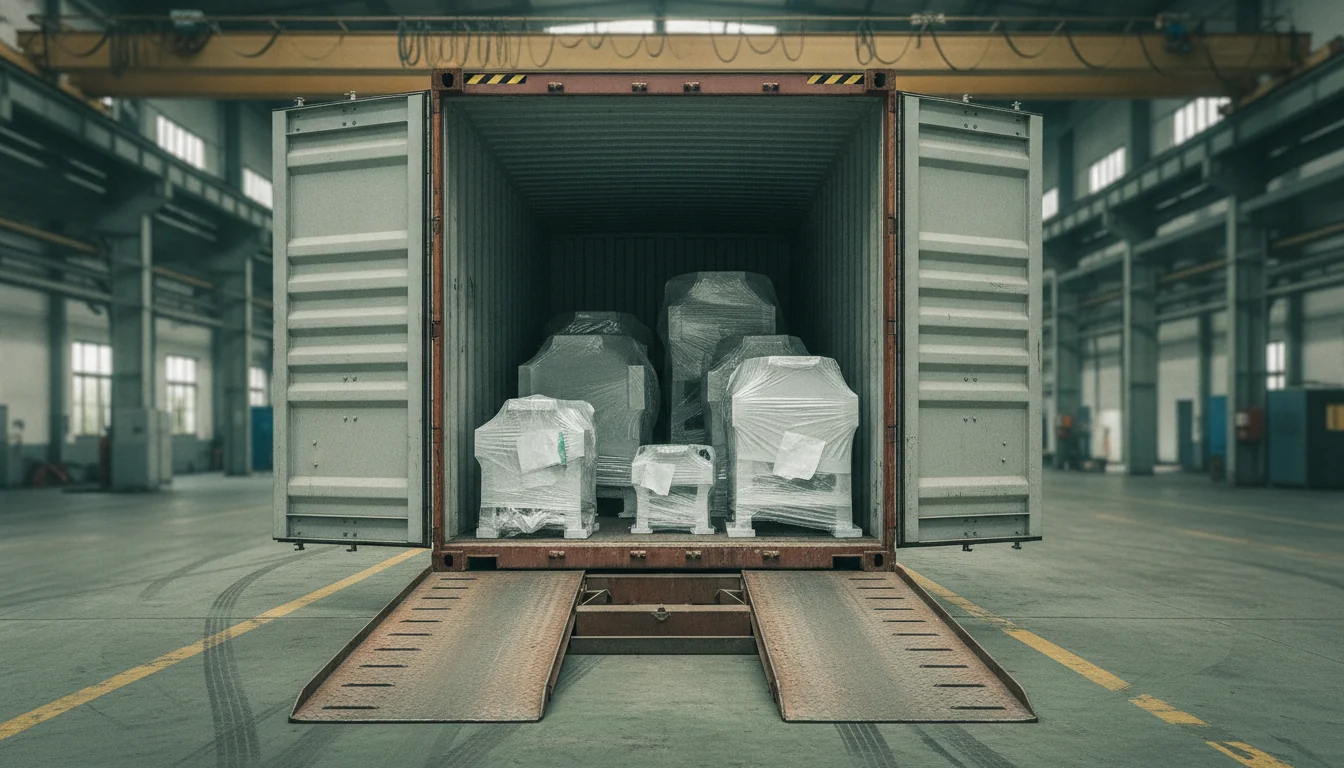
Containerized sewage treatment plants, pre-assembled in ISO containers.
A complete treatment train — screening, equalization, biological treatment, membrane separation and disinfection — built into standard ISO containers, ready for foundation, piping, power and commissioning on site.
What a containerized plant is
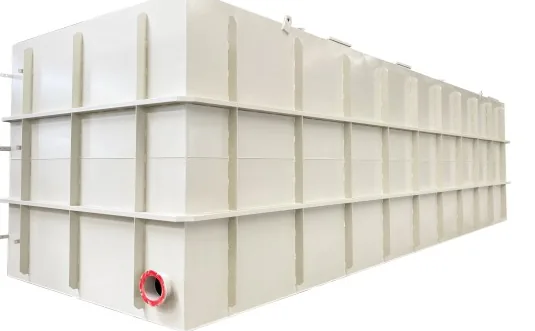
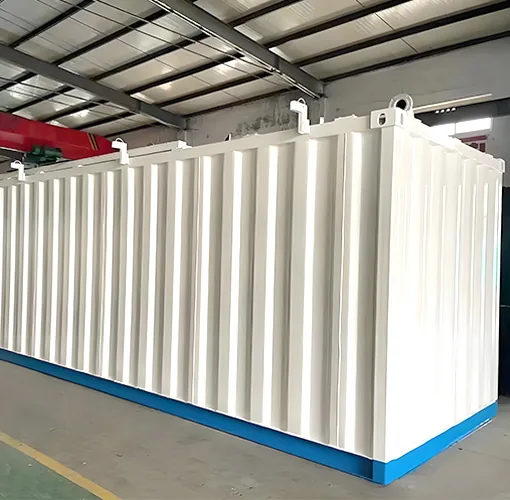
A containerized sewage treatment plant is a complete treatment train installed inside standard ISO containers before it leaves the factory. Equipment is assembled, piped and wired there, then shipped as a ready unit. On site you provide a level foundation, connect the inlet and outlet piping, bring in power and water, and commission the plant.
- ✓ Screening and pre-treatment — coarse and fine screening, grit removal, and an oil & grease trap where required.
- ✓ Equalization tank — buffers peak flow and evens out influent quality before biological treatment.
- ✓ Biological treatment — A/O or MBBR process, sized to the organic load of your wastewater.
- ✓ Membrane separation — MBR modules where a compact footprint and high effluent quality are needed.
- ✓ Disinfection — chlorination, UV or ozone, depending on the discharge or reuse target.
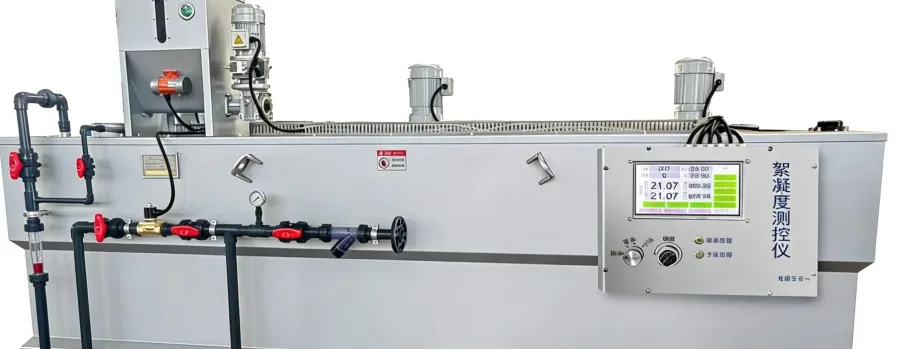
- ✓ Balance of plant — blowers, transfer pumps, dosing sets and a control cabinet, all inside the container.
The process train
- 1Inlet screening — remove coarse solids, grit and debris.
- 2Equalization — buffer flow and quality variation.
- 3Biological treatment — A/O or MBBR removes organic matter and nitrogen.
- 4Membrane separation — MBR retention of solids and pathogens, where the plant is MBR-based.
- 5Disinfection — final reduction of pathogens before discharge.
- 6Discharge or reuse — to the receiving water body, or to irrigation and flushing.
The exact sequence is fixed during sizing, once the influent characteristics and the discharge standard are known.
Where containerized plants fit
Municipal and community
villages, towns and housing developments with a defined service area.
Resorts and hotels
island and coastal properties that need reliable treatment away from a central sewer.
Hospitals and clinics
on-site treatment where discharge quality matters.
Construction camps
temporary sites that need treatment now and relocation later.
Food and beverage
process wastewater with a high organic load.
Slaughterhouses
high-strength wastewater with solids and grease.
Specification parameters
Values are confirmed against the actual build for each project.
| Design flow range | 0.5–15 m³/h (12–360 m³/day) per unit |
|---|---|
| Container size / footprint | 3 × 1.5 × 2 m to 16 × 3 × 3.5 m, depending on capacity |
| Influent COD / BOD / TSS | [to be confirmed with factory] |
| Effluent standard | [to be confirmed with factory] |
| Power supply | [to be confirmed with factory] |
| Control mode | Automatic electrical control with alarm system |
| Installation time | [to be confirmed with factory] |
Model range
The standard CXWSZ series covers 0.5–20 m³/h per unit. Larger flows are met by running several units in parallel or by a custom build.
| Model | Capacity (m³/h) | Dimensions L × W × H (mm) | Units | Weight (t) | Air demand (m³/min) |
|---|---|---|---|---|---|
| CXWSZ-0.5 | 0.5 | 3000 × 1500 × 2000 | 1 | 1.5 | 0.13 |
| CXWSZ-1 | 1 | 4000 × 1500 × 2000 | 1 | 1.7 | 0.26 |
| CXWSZ-2 | 2 | 5000 × 2000 × 2000 | 1 | 2.5 | 0.52 |
| CXWSZ-3 | 3 | 7000 × 2000 × 2500 | 1 | 3.5 | 0.78 |
| CXWSZ-5 | 5 | 10000 × 2500 × 2500 | 1 | 4.5 | 1.3 |
| CXWSZ-10 | 10 | 16000 × 2500 × 2500 | 1 | 8.4 | 2.6 |
| CXWSZ-20 | 20 | 16000 × 2500 × 2500 | 2 | 16.8 | 5.2 |
Dimensions are reference outline dimensions and weights are approximate shipping weights. Both are confirmed against the actual build once the site conditions are known.
Delivery and loading
Plants are factory-assembled and tested before shipment, then shipped in standard ISO containers. Export documentation is provided with every shipment. Loading arrangement, container count and delivery schedule: [to be confirmed with factory].