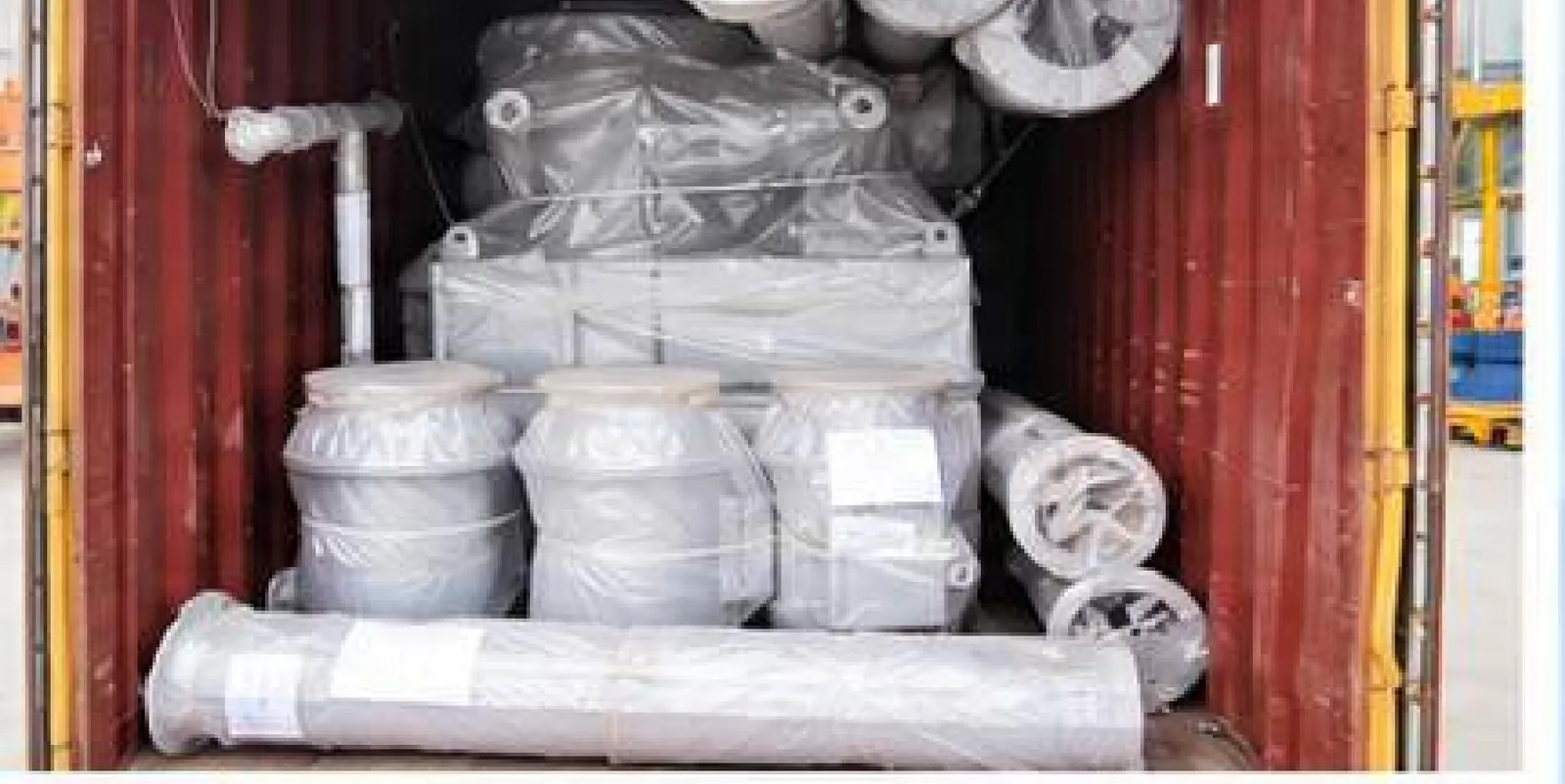
Container loading.
Internal dimensions, volume and payload of the standard containers, and the size limit that decides whether an assembled unit travels in a dry container at all.
Basis
ISO 668 and the corresponding Chinese standard GB/T 1413-2008 give the container internal dimensions and ratings. The payload figures are from publicly available freight information. There is no ready-made authoritative loading table, so the loading algorithm below is our own method, stated in full so it can be checked.
Container internal dimensions
Dimensions and volumes are published container data. Payload is shown as approximate net payload.
| Container | Internal dimensions (m) | Volume | Payload |
|---|---|---|---|
| 20GP — 20 ft general purpose | 5.898 × 2.352 × 2.393 | about 33.2 m³ | net payload about 28 t |
| 40GP — 40 ft general purpose | 12.032 × 2.352 × 2.393 | about 67.7 m³ | net payload about 26.5–27 t |
| 40HC — 40 ft high cube | 12.032 × 2.352 × 2.698 | about 76.3 m³ | [to be confirmed with factory] |
Source: ISO 668 and GB/T 1413-2008; payload figures from freight information. Volume and payload are approximate published values and should be verified against the actual container specification.
Loading algorithm
Effective loading space = internal dimensions − packing and lashing allowance (0.10 m on each side, 0.15 m on top). Units per container = floor(length) × floor(width) × floor(height). Take the smaller of the container count by volume and the container count by payload. Equipment is heavy cargo, so the payload limit usually binds first.
Hard constraint: what fits in a standard dry container
Mainstream integrated equipment is 2.5–3.0 m wide and 3.0 m high and will not fit inside any standard dry container, whose internal width is only 2.352 m. Any monobloc unit wider than 2.2 m or higher than 2.3 m can only ship in a 40 ft open-top (OT) or flat-rack (FR) container, by break-bulk vessel, or be split before it leaves the factory. "Containerized" in supplier literature usually means the unit has its own box-like shell and can travel on a flat rack; it does not mean it fits a standard dry container.
How to use and notes
- Check the internal width first. A 2.352 m internal width rules out any assembled unit wider than that.
- Compute both the volume count and the payload count, then take the smaller number.
- Deduct the packing and lashing allowance before dividing the dimensions, or the count will come out too high.
- For units over 2.2 m wide or 2.3 m high, confirm the open-top, flat-rack or break-bulk route with the forwarder before quoting.
- Factory confirmation pending: the shipping method (monobloc or split) and the actual container type and units per container for each capacity band: [to be confirmed with factory].