Selecting sludge dewatering equipment.
Dewatering turns surplus sludge into a handleable cake. The choice of press follows the sludge, the cake target and the space you have to work in.
Where sludge dewatering sits in the process
- 1Biological treatment produces sludge — the biology grows solids as it removes organic matter.
- 2Thickening — the sludge is concentrated before dewatering so the dewatering unit is not oversized.
- 3Dewatering — water is pressed or spun out to produce a handleable cake.
- 4Cake handling and disposal — the cake is stored, transported and then disposed of or reused according to the site rules.
Equipment types we can discuss
Each type suits different sludges and cake targets.
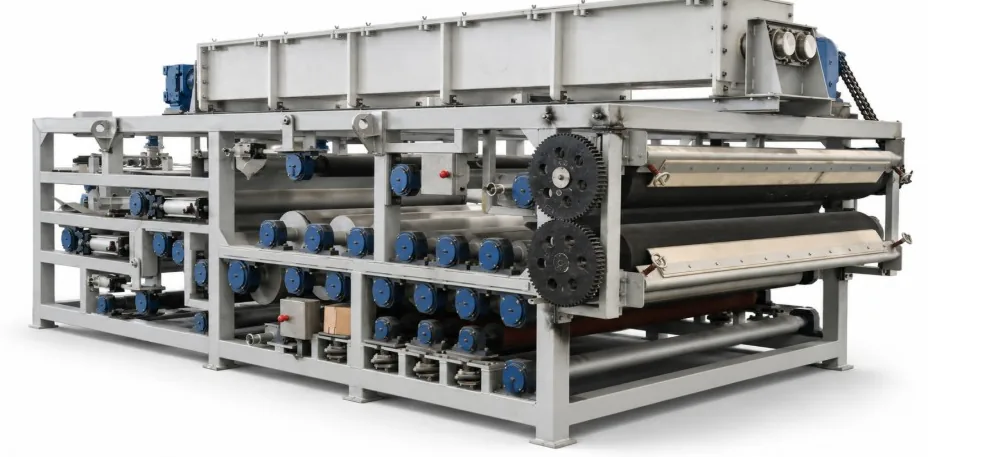
Belt filter press
sludge is squeezed between moving belts as water drains under gravity and then under pressure.
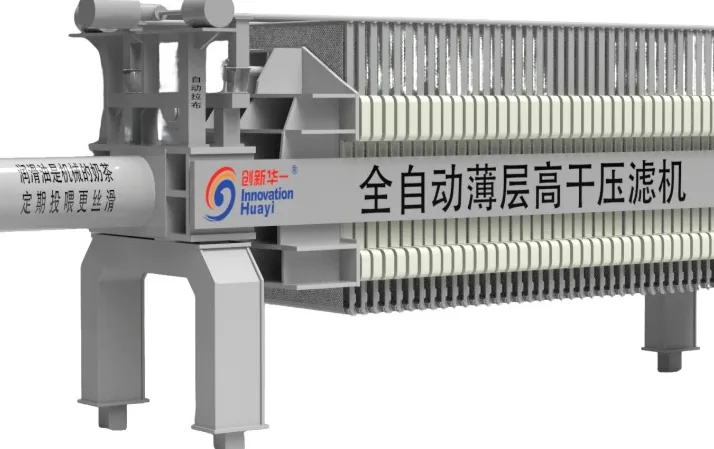
Plate-and-frame filter press
sludge is pumped into closed chambers and pressed to a firm cake in batches.
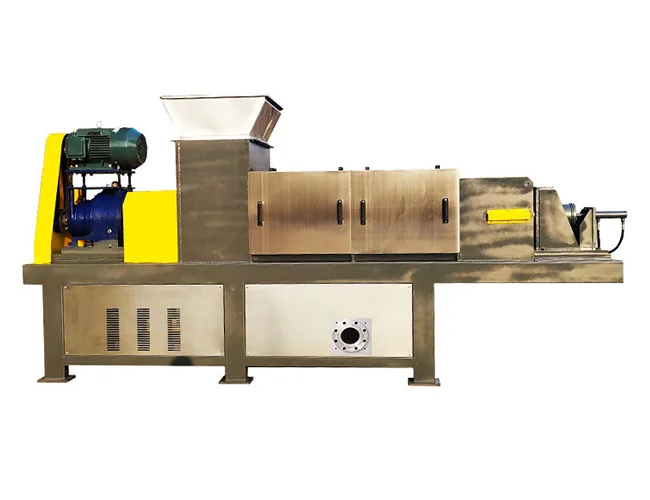
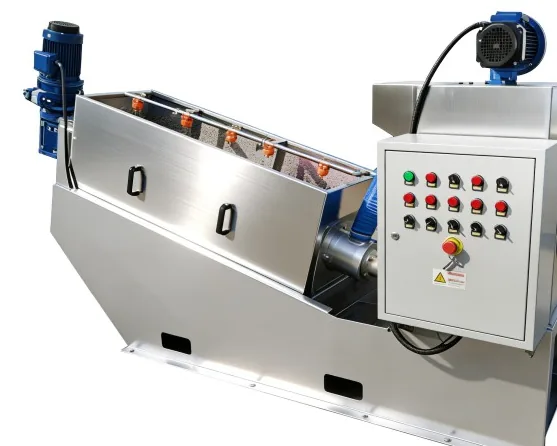
Screw press and multi-belt press
a slowly turning screw or a stack of belts compacts the sludge continuously.
Centrifuge
high-speed rotation separates solids from water by density.
How to choose
The values for each project are confirmed against the actual sludge and site.
| Sludge type and concentration | Municipal, livestock, slaughtering, food, chemical and pharmaceutical, and mining sludges |
|---|---|
| Required cake dryness | [to be confirmed with factory] |
| Footprint available | [to be confirmed with factory] |
| Chemical conditioning | Polymer dosing system, mounted on the dewatering skid |
| Operator level | Unattended — automated one-push-button start and stop |
| Throughput | 4–50 m³/h across the belt filter press range |
Centrifuge vs belt press vs screw press
These three machines are the ones most often quoted against each other for the same duty. The comparison below sets out what each one does by construction. The centrifuge is included as a reference: we do not supply centrifuges, so it is here to be compared against, not to be offered.
| Aspect | Centrifuge | Belt filter press | Screw press |
|---|---|---|---|
| How it separates | Solids are thrown to the bowl wall by centrifugal force, and the scroll conveys them out | Water drains under gravity on the belt, then the sludge is pressed between rollers | A slowly turning screw compacts the sludge against a stack of rings or plates |
| Cake dryness | Set by the sludge and by its conditioning more than by the machine type, so an indicative figure for any of the three has to come from a test on the sludge in hand | As at left — the dryness reached depends on the sludge and on how well it is conditioned | As at left — the dryness reached depends on the sludge and on how well it is conditioned |
| Footprint and enclosure | Fully enclosed rotating machine, compact, and it can stand outdoors | The largest footprint of the three, and it usually needs a cover, wash water and drainage | Compact, and it can run unattended with little wash water |
| Power and noise | Highest of the three: a bowl turning at high speed carries the largest installed power and the most noise | The middle of the three | Lowest: a slow-turning screw, so little power and little noise |
| Conditioning chemical | Sensitive to polymer conditioning; the floc has to survive very high shear | Needs conditioning, and the floc has to stay intact under roller pressure | Needs conditioning, and tolerates a floc that is less strong than the belt press requires |
| Wear parts and service | Bowl and scroll wear, balance and specialist repair; the machine is not normally serviced on site by the plant operator | Filter belts, rollers and wash nozzles — wear parts that are replaced on site | Screw flights and ring plates; slow speed, so wear is gradual and the work is within a plant technician's reach |
| Where each one suits | Large flows where a compact, enclosed machine and the lowest wash-water demand matter most | Municipal and mixed sludges where the duty is steady and a firm cake at moderate throughput is the target | Small and medium duties, unattended sites, and sludges that suit a slow, low-noise machine |
| Supply status | Reference comparison only — we do not supply centrifuges | Supplied, in the CXSW belt filter press range | Supplied, in the CXDL screw press range |
The plate-and-frame filter press is the fourth option on this page and works in batches rather than continuously. Cake dryness, throughput and polymer demand for a given sludge are confirmed with the factory for your sludge rather than read from this table.
Selection steps
- 1Characterize the sludge — type, solids concentration and how it behaves.
- 2Set the cake target — the dryness the disposal or reuse route needs.
- 3Pick the press type — match the equipment to the sludge and the cake target.
- 4Size and power the unit — capacity, conditioning and the power available on site.
- 5Plan the civil works — foundation, drainage and the space needed for cake handling.
What to send us
- Sludge type and source.
- Dry solids content of the sludge.
- Daily sludge volume.
- Target cake dryness.
- Footprint available.
- Discharge and disposal route for the cake.