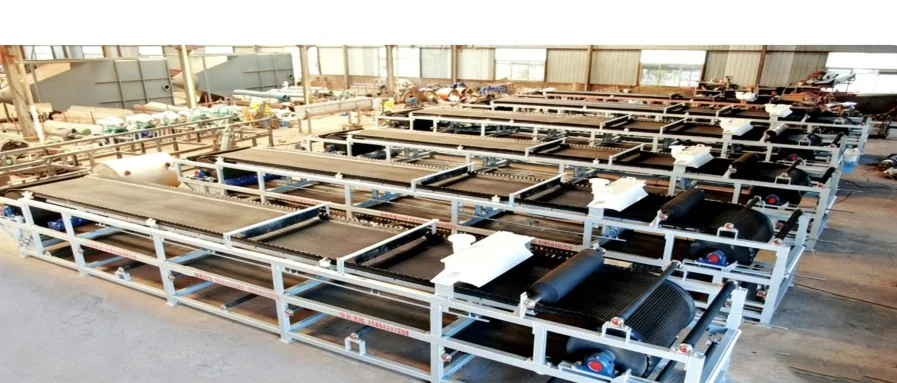
Sludge scrapers.
Drive bridges that travel a circular sedimentation tank and move the settled sludge to the discharge point, so a clarifier empties its floor continuously instead of being taken out of service to be cleaned.
What a sludge scraper does
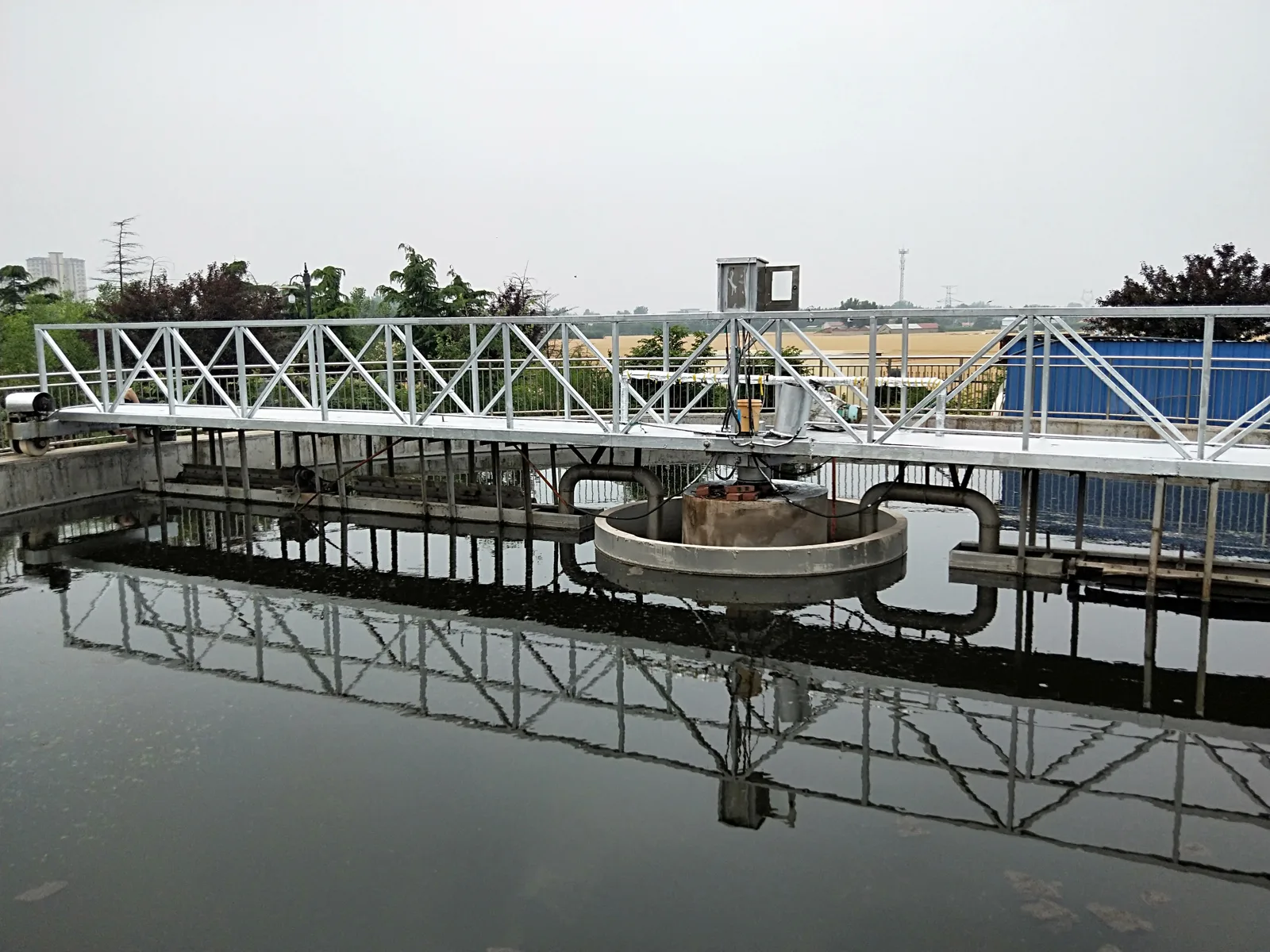
A clarifier settles solids onto its floor, and those solids have to be removed before they start to thicken and turn septic. A sludge scraper does that job continuously: a bridge spans the tank, blades or scraper arms reach down to the floor, and as the bridge travels the settled sludge is driven towards the discharge point at the centre, from where it is drawn off. The clarified water is taken from the upper layer, normally over a weir at the rim. Circular clarifiers are scraped either from a drive on a central column or from a drive that runs on the tank periphery; the CXZB range covers the peripheral-drive arrangement, in which the bridge is carried around the rim on its own drive units and no central support structure is needed inside the tank. The bridge is built as a truss, and the parts that contact the water are made in stainless steel.
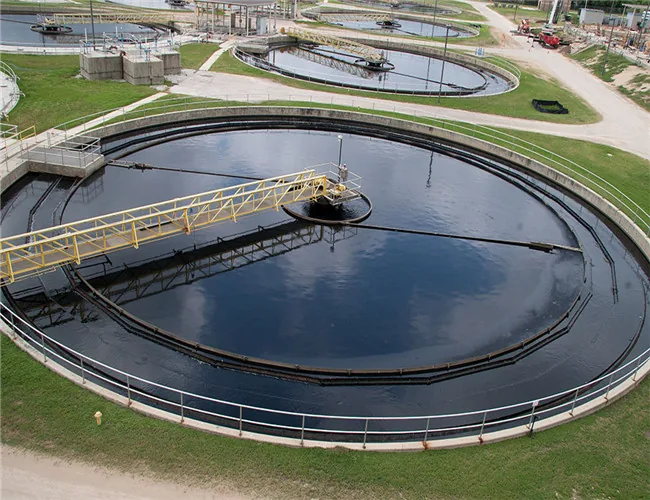
Factory footage
CXZB peripheral-drive sludge scraper
The CXZB scraper is made up of the bridge, the cut-off walls, the transmission system, the water tank, the sludge collection tank, the sludge discharge device and the electrical equipment. Water to be treated enters the tank through central pipes and flows out into the sedimentation basin; clean water in the upper layer is discharged directly, while the sludge on the floor is driven to the collection tank by the travelling bridge and then discharged. The bridge runs on its own peripheral drive units, so the tank interior stays clear, and the scraper blades are arranged to keep the floor swept from the rim to the centre. The bridge can be customised to suit the tank it has to fit and the duty it has to do.
| Model | Tank diameter (m) | Tank side depth (m) | Peripheral speed (m/min) | Motor power (kW) |
|---|---|---|---|---|
| CXZB series | [to be confirmed with factory] | [to be confirmed with factory] | [to be confirmed with factory] | [to be confirmed with factory] |
The CXZB model range and its tank diameters, side depths, peripheral speeds and motor ratings are being confirmed with the factory. The table is published once those figures are verified; final dimensions and weights are then confirmed against the site conditions and the actual build.
Bridge, drive and floor equipment
The working parts of a scraper are the bridge, the drive and what reaches the floor. The bridge is fabricated as a truss so that it spans the tank with the walkway and handrail on top and the scraper arms below; the drive units run on the tank rim or on a centre column, and the drive is sized to move the bridge and the sludge load it pushes at the same time. The scraper arms are fitted with blades or squeegees that follow the tank floor profile, and the same bridge carries the scum and sludge collection equipment. Steel that contacts water is stainless; the rest of the structure is fabricated and painted at our factory.
Applications
Circular clarifiers
Removing the settled sludge continuously from circular sedimentation tanks.
Sedimentation tanks
Keeping the floor of a primary or secondary sedimentation tank clear.
Municipal treatment plants
Clarifier duty in municipal wastewater treatment plants.
Industrial treatment plants
Clarifier duty in industrial plants where the solids load is steady.
Water works
Sludge removal from settling basins in water treatment.
Retrofit of existing tanks
Replacing a bridge and drive on a tank that is already built.
Delivery
Units are assembled and tested at our factory before shipment, then shipped with export documentation. Loading arrangement and delivery schedule: [to be confirmed with factory].