Rotary rake screen.
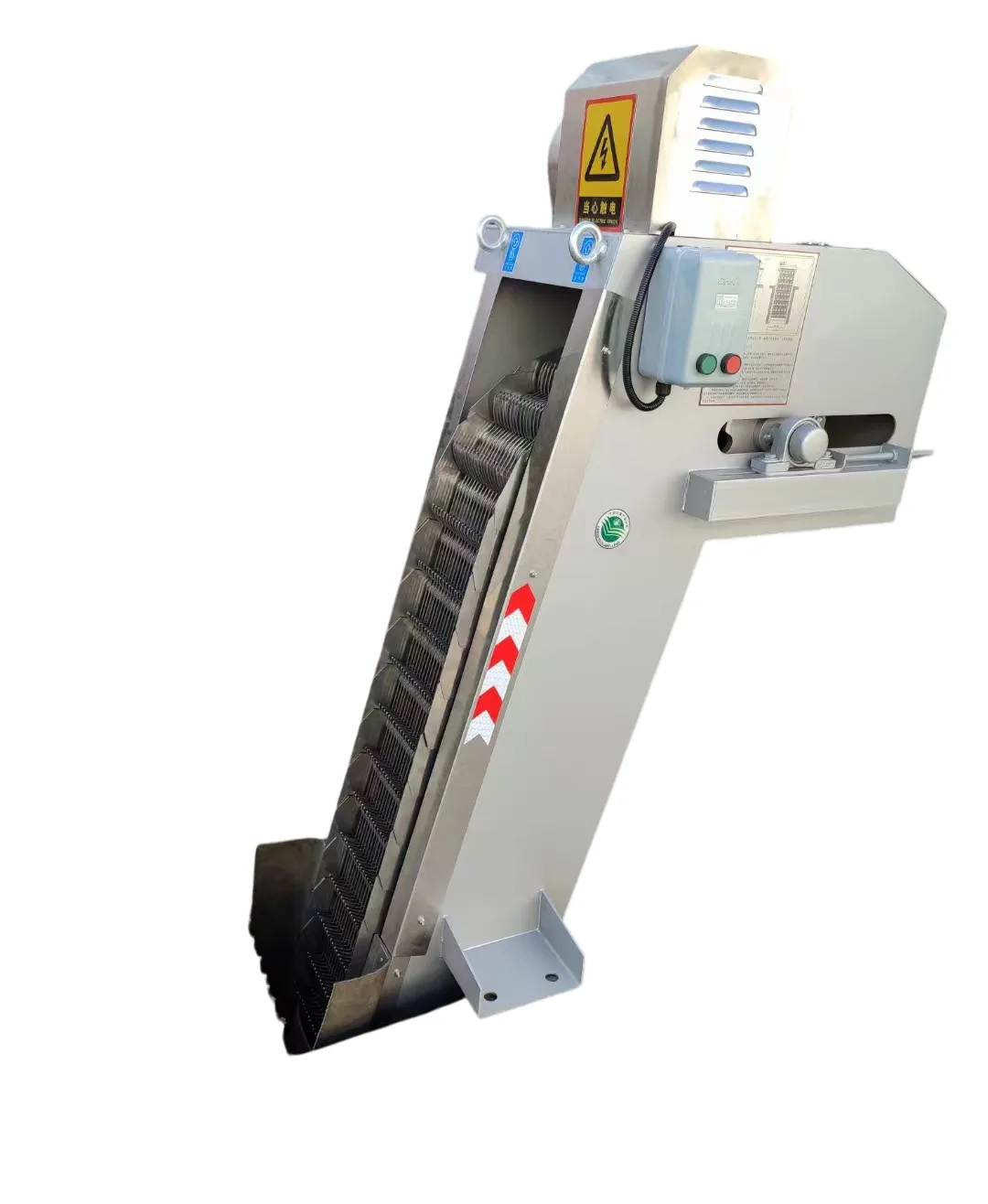
A bar screen with a moving rake: rake teeth carried on a continuous chain comb the bars on the way up, lift the screenings above the water line and discharge them clear of the channel.
How a rotary rake screen works
The screen surface is a set of stationary bars on an inclined frame that sits in the channel, and the raking is done by a continuous chain of rake teeth. On the ascending pass the teeth comb the material that has collected on the bars, lift it above the water line and discharge it into a skip, a conveyor or a bagging point. The teeth then travel back on the underside of the frame, so they are out of the flow on the return pass and cannot carry material back down the channel. Because the raking is mechanical and continuous, the screen runs unattended on a flow that varies through the day and keeps the inlet clear without anyone raking the bars by hand. The bar spacing is what sets the duty: the same design covers a coarse screen in front of the pumps and a fine screen at a plant headworks.
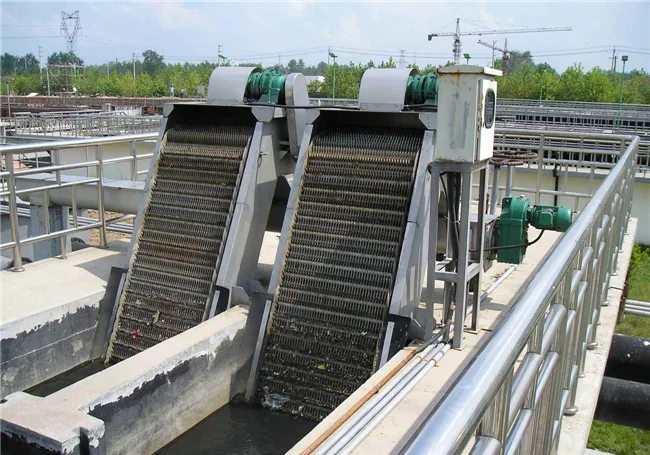
Rotary rake screen, inclined type
The frame is set into the channel at an angle so that the ascending rake chain carries the screenings up and over the channel wall to the discharge point. The bars, the rake teeth and the frame are fabricated in stainless steel, and the drive is mounted on the head section above the water line, where it can be reached for maintenance from the walkway.
Coarse and fine bar spacing
The same frame takes a coarse or a fine bar set, and that is what separates the two duties. Coarse spacing is the pump-station arrangement: the screen takes the bulk of the debris out of the flow ahead of the impellers. Fine spacing is used at a plant headworks, or ahead of a stage that needs a smaller aperture to protect it.
Applications
Pump stations
Screening ahead of the pumps, where the debris has to be out of the flow before it reaches the impellers and the discharge pipework.
Plant headworks
The inlet duty of a treatment plant, ahead of grit removal and the process stages that follow it.
Industrial inlet screening
Screening the incoming flow at a factory, where the wastewater carries process debris, fibres and packaging material.
Delivery
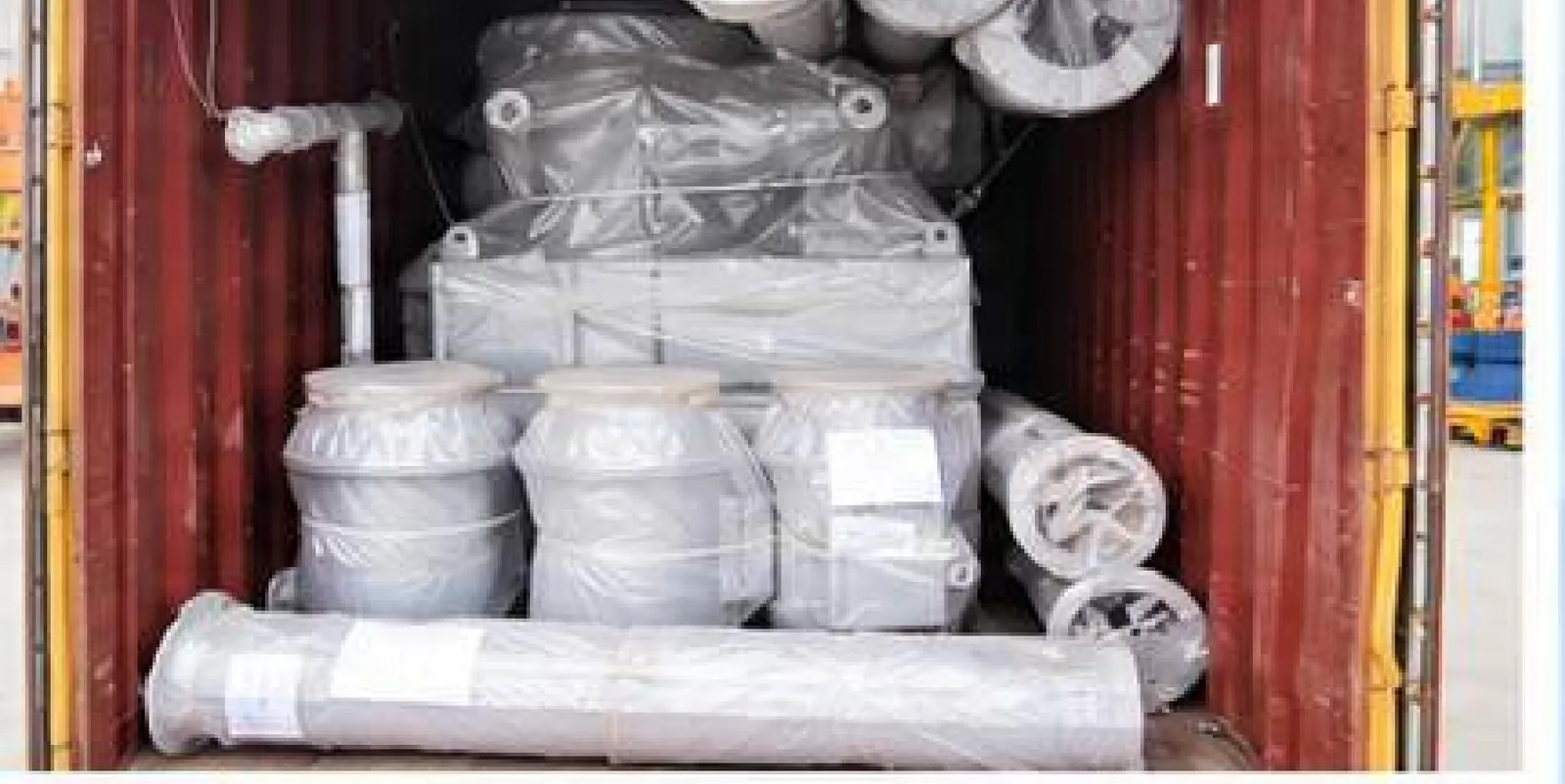
Units are assembled and tested at our factory before shipment, then shipped with export documentation. The channel dimensions, the frame angle and the discharge arrangement are confirmed against the site before the build. Loading arrangement and delivery schedule: [to be confirmed with factory].